
How customization, relatability, and the design of social media leads to some weird comments.
It’s not a new problem to see comment sections on social media full of “whataboutisms” and misguided commenters pointing out that this particular opinion doesn’t accommodate for “X” group of people. And even worse, those commenters that make suffering a competition. Lowered media literacy, customization, and the design of social media work together to make a nice little stew of problems that lead users down this path.
Individualism exacerbates the problem
The wonderful thing about social media is the fact that we form connections with so many people, far and wide. As social media has exploded beyond having MySpace’s Top Eight, or the hookup site Facebook was supposed to be, we’ve seen creators create content with relatability at top of mind. Forming a bond with your audience has become the easiest way to grow your audience.
We’re also entering an age where customization has become king. Any time you receive a customized marketing email, personalized ad, or one of those ads on Facebook that feels like they’ve been listening to your conversations, that’s all based on your data. When you set up a new user profile on a website and you’re already receiving eerily accurate personalized recommendations, that’s using your data.
So, when personalization has become the expectation and we, as an audience, craving relatability, come across something that doesn’t quite meet the mark, some users feel the urge to share that.
This has been dubbed “the bean soup effect” on TikTok, relating back to when TikTok user @vibingranolamom shared a “high iron bean soup recipe that you need to eat on your period” and the commenters went so far as to ask for so many substitutions they asked “what should I do if I don’t like beans.”
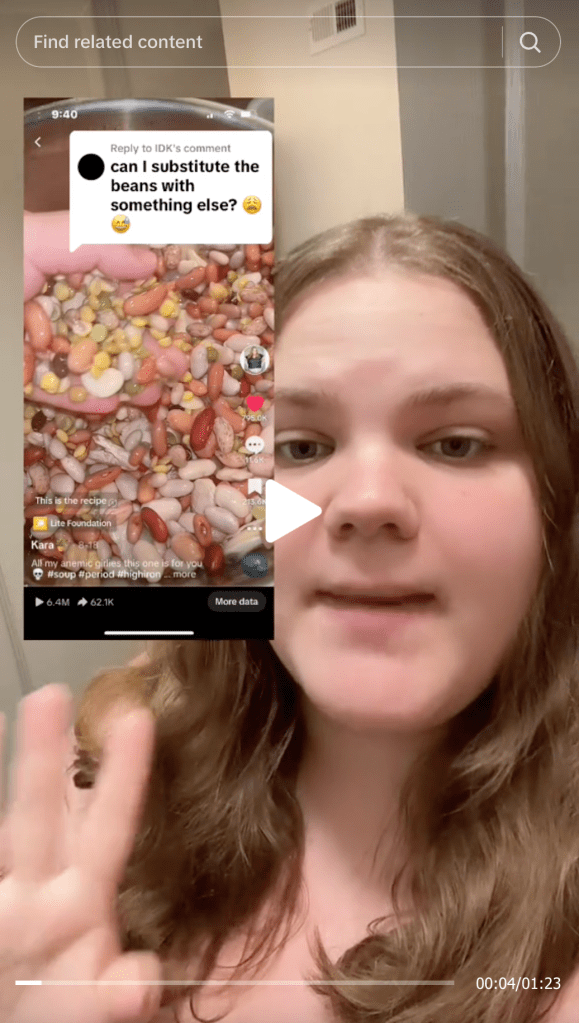
This clearly created frustration among many other TikTok users because, the obvious answer for most would be to move on to another recipe. Yet, so many users failed to do this, why? In an everyday conversation would these people ask “how do I make this soup recipe without beans?” In my opinion, the value proposition provided at the beginning of the video also caught users unable to move on. What if I’m worried about my iron levels on my period, but I don’t like beans?
This is where one of the first gaps in media literacy comes in. Putting together the idea that you should move on from the bean soup recipe to help your anemia if you don’t like beans involves reading comprehension and making inferences about anemia that you may not put together without these skills.
Users don’t realize that problems aren’t mutually exclusive
Not only do users frequently not understand how to cope with content that doesn’t cater to their needs, but they also need everyone to know that the issue they hold nearest and dearest to them is important too. A classic example of this is when twitter user @lilplantmami shared the below tweet:
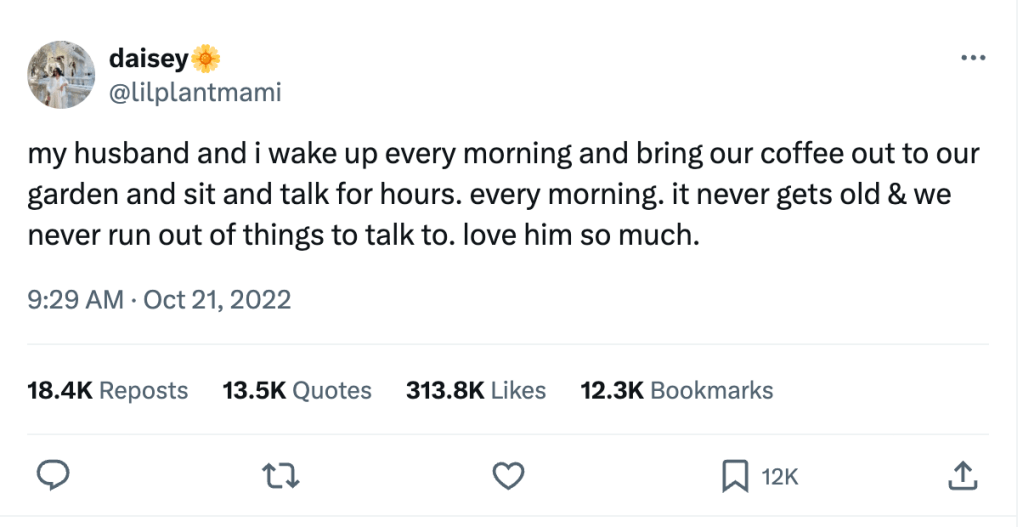
She was then bombarded with responses about how this tweet was somehow insensitive. Answers like, “Every day I wake with chronic pain, and wash my medication down with an oat milk latte.” Or, “This is nice, but did you think about all the people who have to spend hours every day doing grueling work, and don’t get to enjoy moments like this!!” I’m paraphrasing here, but these are what the actual replies to this benign tweet about enjoying the morning and loving your husband were like.
This is luckily a pretty benign example, but sometimes it’s Ukrainian creators discussing the literal war they are at with Russia, and commenters demanding that they make videos in support of Palestine. These people are at war, for goodness sake!
In the digital age, we get to learn about so many more experiences that are different than our own. More importantly, we learn about how those differences get discriminated against, and hopefully receive some insight into how we can make a difference for those who might be different than us. The pure knowledge that there are other human experiences and ways for us to be more sensitive to those experiences is a way that each of us feel empowered to help.
This empowerment and awareness leads to an unfortunate side effect, which is that sometimes commenters try to compete for which issue is most important. What is missing here, is that all of these issues, all of the hurt in the world doesn’t exist in the vacuum, nor does help.
This exposes further gaps in media literacy. The first, that the intention behind content is not malicious, even if it might strike a chord with you. What’s more, for users to properly understand the nuances surrounding an issue, that content surrounding one topic doesn’t take away from another. Most issues are not mutually exclusive, but instead they’re actually intersectional, and it’s possible for multiple things to be true at once.
Social Media is Designed For This Engagement
That said, social media draws this behavior out in everyone. Every social media platform is designed to increase engagement among users. Think about it, when you’re scrolling through TikTok, Facebook, or Instagram, you have three primary options when you see a post: like, comment, or move on. If it’s a video that piques your interest, stirs up some thoughts in your brain, makes a connection for you, depending on how loud the voice in your head is and how comfortable you feel commenting may dictate whether or not you comment.
A 2021 study by a team at the University of Washington looked at which aspects of social media design might encourage or discourage someone from arguing on social media. One interesting finding from this study, which notably didn’t include TikTok (it was published in 2021, so research was likely done in 2020, very early days of TikTok), was that the audience users had played a role in how they engaged online.
In summation of the participant’s experience with Facebook, “Seventy percent of our participants had engaged in a Facebook argument, and many spoke negatively of the experience. People said they felt it was hard to be vulnerable because they had an audience: the rest of their Facebook friends.”
Extrapolating from that study, I think the opposite sentiment applies to TikTok. Since the For You Page sends thousands of videos out to millions of users every minute, users frequently feel anonymous in the comment section. Furthermore, TikTok, similar to Twitter, has more anonymous users, and allows for more engagement with strangers. I think this also extends to comments on public Facebook pages, and Instagram reels. Your friends may not comment unhinged things on your friends posts, but their engagement on public posts could be more out of pocket.
When you feel anonymous, many feel more comfortable commenting things they wouldn’t normally say when surrounded by an audience of people they actually know. The pseudo-anonymity of TikTok, coupled with how the platform is designed to compel users to comment, this only adds to why we see so many uninformed, ill-advised comments online.
So, what?
Frequently people don’t think when they’re commenting. That said, as we consume comments, either as the creator who has received the comment, or as another user reading the comments, it holds as much meaning as all the other content we’re consuming in the app. Someone may have thoughtlessly left a comment but it matters to the rest of us what other people are saying, especially about a piece of content we care about.
So, no. I don’t think it’s entirely a media literacy problem contributing to this type of engagement online. There are other areas where we see concerning gaps in media literacy across the board in both young and older generations, distinguishing truth from lies, discerning whether something is AI generated or not, and more. That said, I think more than anything, these comments are a symptom of the medium of social media as a whole. We’re on social media seeking a connection to others, so when something even tangentially relates to us, and we’re protected by the relative safety of anonymity that algorithmic feeds provide, then we’re going to be seeing more careless comments moving forward.


 Molly Sparkles
Leave a comment